
Earnie
ARTICLEENGINEERING

The critical role of version specificity in SBOMs

Without an exact version, every fact attached to a component becomes a moving target.
Julián Coccia
CEO
2 min read
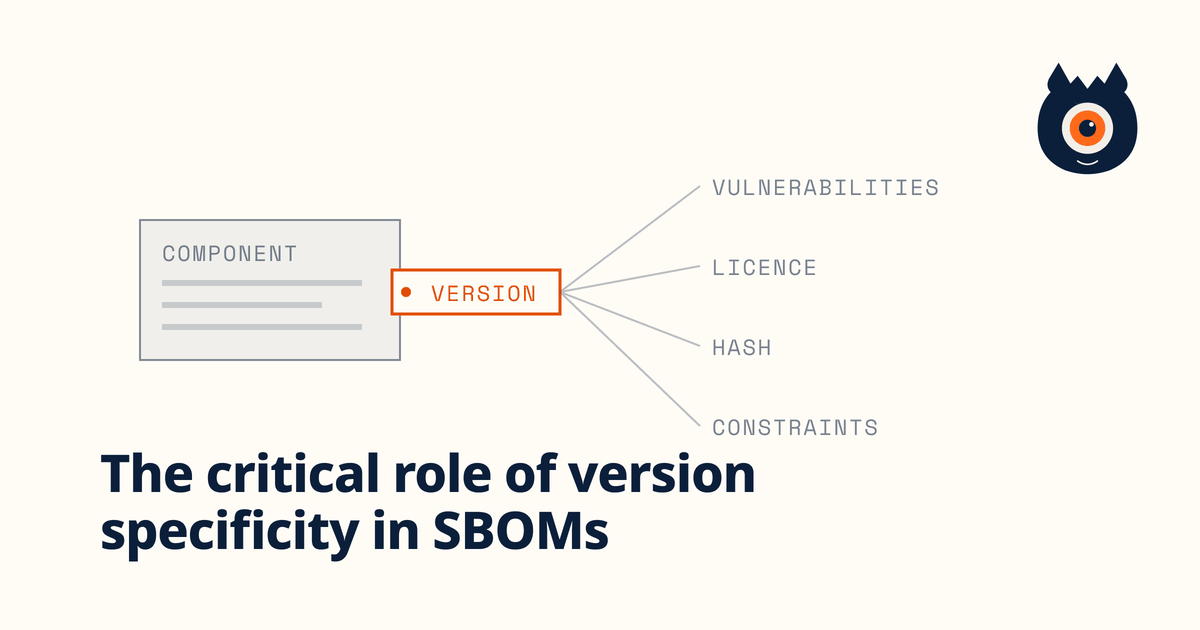
A component's version, in orange, linked to vulnerabilities, licence, hash and constraints

TL;DR: A debate in the SBOM community asks whether licence information is static or dynamic. It overlooks a more fundamental issue: the absolute necessity of including specific component versions. Without precise versions, vulnerabilities, licences, hashes and dependencies all become moving targets, and the SBOM loses much of its value.

In the evolving landscape of software supply chain security, Software Bills of Materials (SBOMs) have become a crucial tool. However, a debate is currently brewing within the community regarding SBOM specifications, particularly concerning the nature of licence information.

One camp argues that licence information is static and unchanging, much like a component's name or publisher. The opposing view suggests that licences, similar to vulnerabilities, are dynamic and subject to change over time.

While this discussion is important, it overlooks a fundamental issue that renders the debate almost moot: the absolute necessity of including specific component versions in SBOMs.

Why does an SBOM need exact versions?

Without precise version information, an SBOM loses much of its value. Here's why:

  1. Vulnerability tracking becomes impossible: Different versions of the same component may have different vulnerabilities.
  2. Licence changes go unnoticed: Software licences can and do change between versions.
  3. Cryptographic composition becomes unreliable: Hash values and other cryptographic identifiers vary between versions.
  4. Dependency resolution becomes ambiguous: Other components may depend on specific versions.

In essence, omitting version information turns an SBOM into a list of moving targets. Any metadata associated with a component, be it licence information, vulnerability status, or cryptographic identifiers, becomes a variable rather than a constant.

What happens to an SBOM without them?

This variability defeats the primary purpose of an SBOM: to provide a clear, accurate, and actionable inventory of software components. Without version specificity, an SBOM is akin to a map without a scale: it might give you a general idea of the landscape, but it's not precise enough for navigation.

As the SBOM specification debate continues, let's not lose sight of this critical point. Version information isn't just another field in an SBOM: it's the linchpin that holds the entire concept together. Only with specific versions can we transform SBOMs from vague outlines into the powerful security tools they're meant to be. It's also why accurate attribution matters as much as detection, and why Earnie records the version actually present in the code.

RELATED READING

See it on your kind of codebase.

Request a demo
The critical role of version specificity in SBOMs
Earnie
ARTICLEENGINEERING

The critical role of version specificity in SBOMs

Without an exact version, every fact attached to a component becomes a moving target.

Julián Coccia
CEO
2 min read
A component's version, in orange, linked to vulnerabilities, licence, hash and constraints

TL;DR: A debate in the SBOM community asks whether licence information is static or dynamic. It overlooks a more fundamental issue: the absolute necessity of including specific component versions. Without precise versions, vulnerabilities, licences, hashes and dependencies all become moving targets, and the SBOM loses much of its value.

In the evolving landscape of software supply chain security, Software Bills of Materials (SBOMs) have become a crucial tool. However, a debate is currently brewing within the community regarding SBOM specifications, particularly concerning the nature of licence information.

One camp argues that licence information is static and unchanging, much like a component's name or publisher. The opposing view suggests that licences, similar to vulnerabilities, are dynamic and subject to change over time.

While this discussion is important, it overlooks a fundamental issue that renders the debate almost moot: the absolute necessity of including specific component versions in SBOMs.

Why does an SBOM need exact versions?

Without precise version information, an SBOM loses much of its value. Here's why:

  1. Vulnerability tracking becomes impossible: Different versions of the same component may have different vulnerabilities.
  2. Licence changes go unnoticed: Software licences can and do change between versions.
  3. Cryptographic composition becomes unreliable: Hash values and other cryptographic identifiers vary between versions.
  4. Dependency resolution becomes ambiguous: Other components may depend on specific versions.

In essence, omitting version information turns an SBOM into a list of moving targets. Any metadata associated with a component, be it licence information, vulnerability status, or cryptographic identifiers, becomes a variable rather than a constant.

What happens to an SBOM without them?

This variability defeats the primary purpose of an SBOM: to provide a clear, accurate, and actionable inventory of software components. Without version specificity, an SBOM is akin to a map without a scale: it might give you a general idea of the landscape, but it's not precise enough for navigation.

As the SBOM specification debate continues, let's not lose sight of this critical point. Version information isn't just another field in an SBOM: it's the linchpin that holds the entire concept together. Only with specific versions can we transform SBOMs from vague outlines into the powerful security tools they're meant to be. It's also why accurate attribution matters as much as detection, and why Earnie records the version actually present in the code.

RELATED READING
ARTICLE · ENGINEERING
Misattribution in SCA: the real accuracy problem
ARTICLE · ENGINEERING
SBOMs as living risk infrastructure

See it on your kind of codebase.

Request a demo