Earnie
PRODUCT UPDATECOMPANY NEWS

More control over vulnerability decisions with Earnie

Earnie adds VEX statements, policy dry runs, compliance packages and AI-assisted snippet review to support vulnerability and compliance decisions.

Matias D’Aloia
Chief Product Officer
3 min read

TL;DR: Earnie now connects vulnerability decisions, policy testing and compliance reporting in a more complete workflow. Teams can record whether vulnerabilities affect their products, test policy changes against real findings before enforcing them, and generate the evidence needed for regulators and customers. Snippet classification is also available as a preview to help reviewers assess potential false positive matches.

What's new in Earnie

This update brings several improvements to how teams review findings, apply security policies and prepare software compliance evidence.

Vulnerability statements: record what actually affects your product

Not every vulnerability identified in a software component necessarily affects the product that uses it.

Earnie now supports Vulnerability Exploitability eXchange (VEX) statements, allowing teams to record whether a vulnerability is affected, not affected, fixed or still under investigation.

Each statement includes a justification and a full history, so teams can document the reasoning behind their decisions.
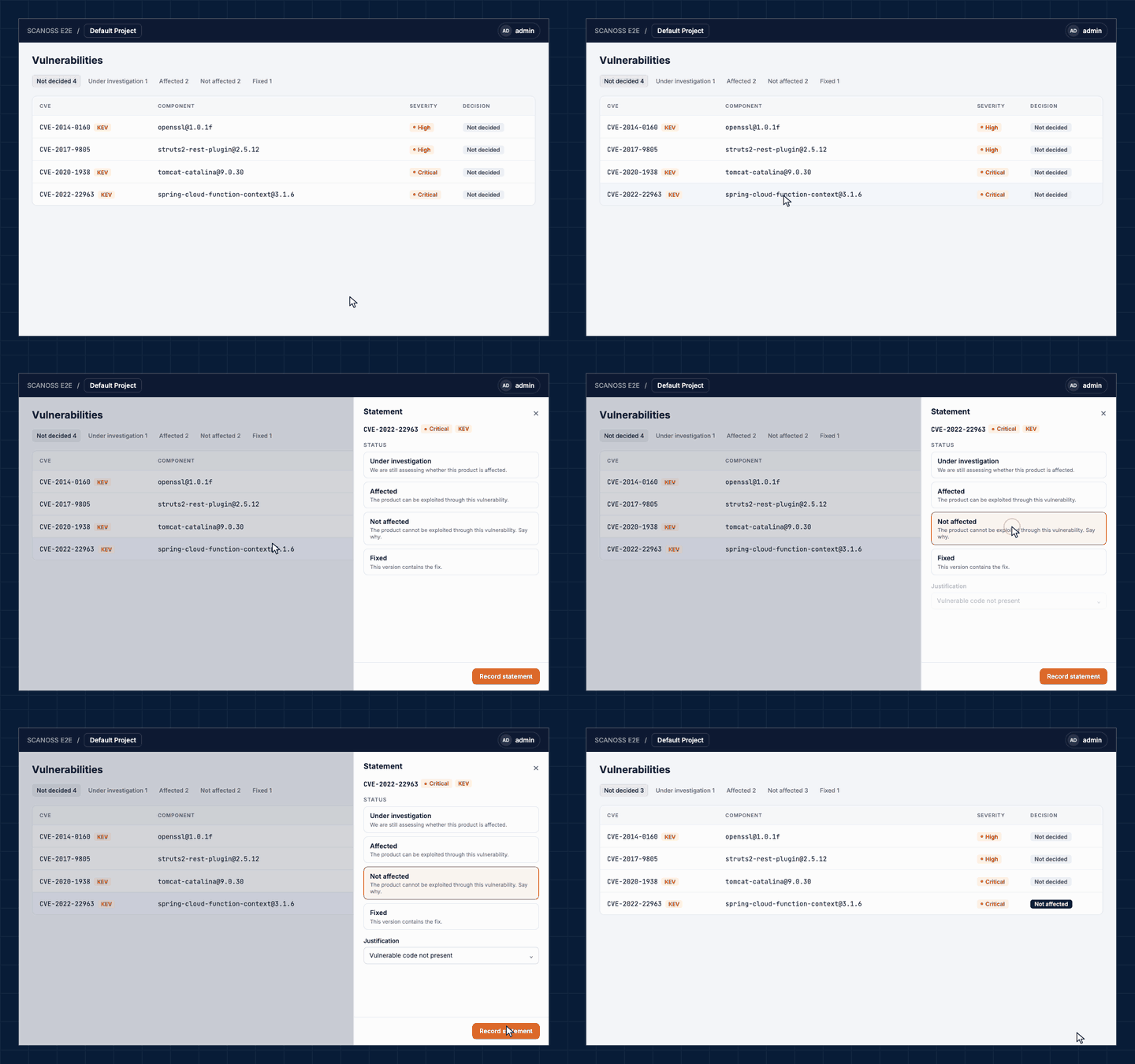
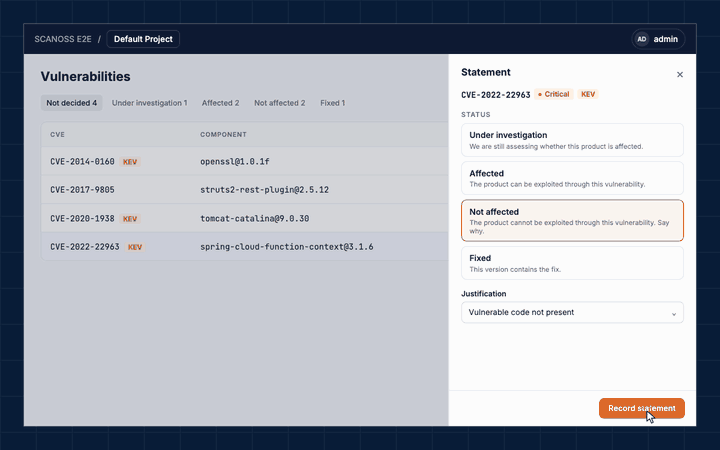
Recording a VEX statement for a CVE: status Not affected, justification Vulnerable code not presentRecording a VEX statement for a CVE: status Not affected, justification Vulnerable code not present

These decisions also flow into the rest of the workflow. Policies and project CVE counts take VEX status into account, while CycloneDX exports include the analysis. Teams can also generate standalone CycloneDX VEX and OpenVEX files for use with other security tools.

The result is a consistent record of vulnerability decisions, from internal review to external reporting.

Policy testing: see what a rule would block before enforcing it

Changing a security policy can affect developers across multiple projects.

Earnie's new Try it feature lets teams test a draft policy against real project findings before saving it.

The editor shows exactly what the policy would block, allowing teams to review the results and adjust the rule before it affects development workflows.
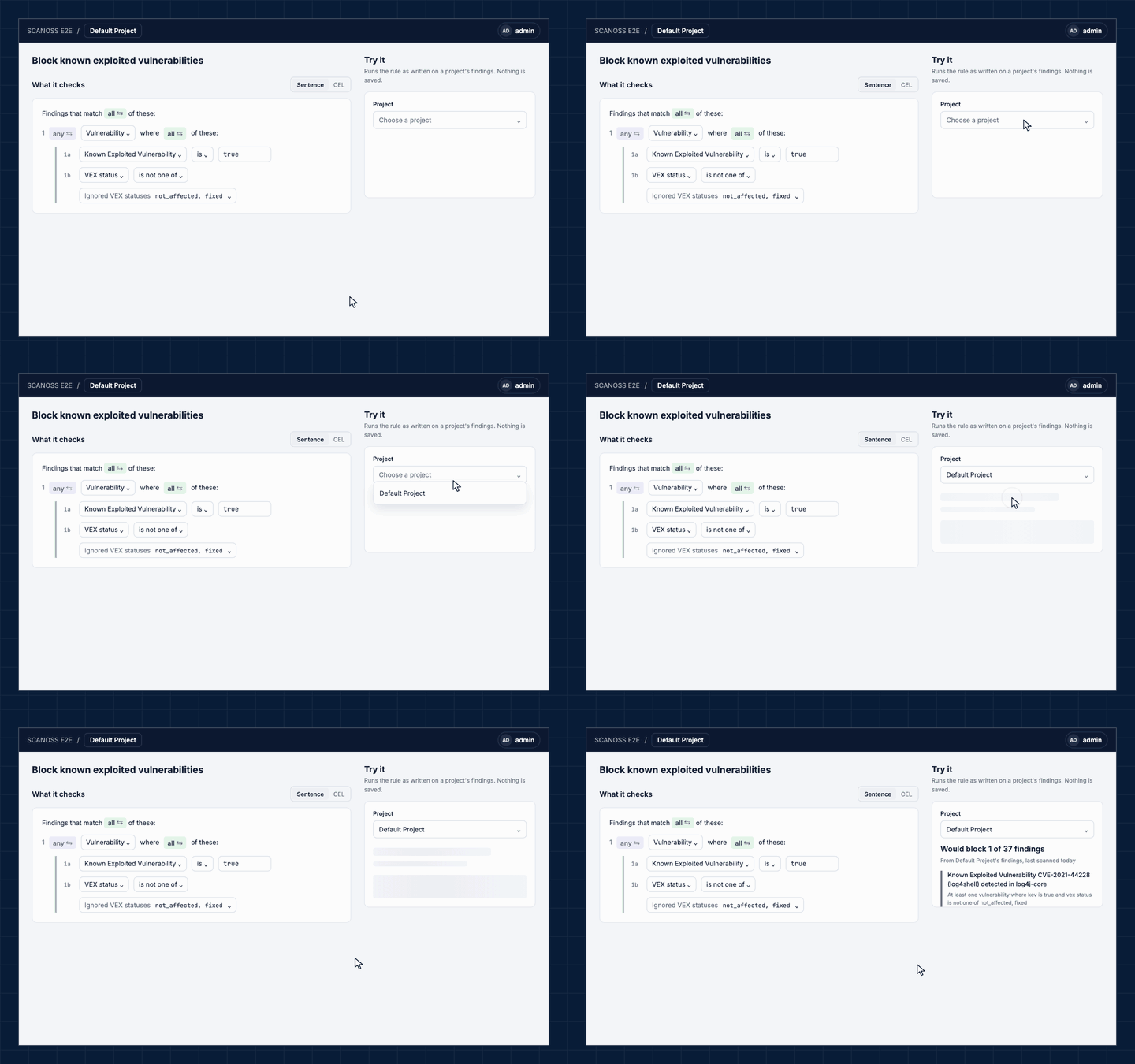
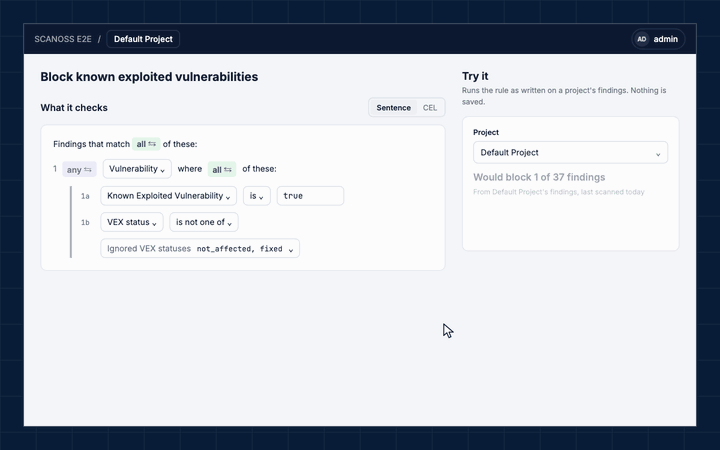
Policy editor with the Try it panel: the draft rule would block 1 of 37 findingsPolicy editor with the Try it panel: the draft rule would block 1 of 37 findings

For example, a draft policy might block one finding out of 37. Teams can inspect that result and refine the policy without saving the changes or affecting an active project.

This makes it easier to introduce and adjust governance rules with a clearer understanding of their impact.

Reports and compliance packages: bring your evidence together

Software compliance often requires several different documents, from SBOMs and cryptographic inventories to licence notices and vulnerability reports.

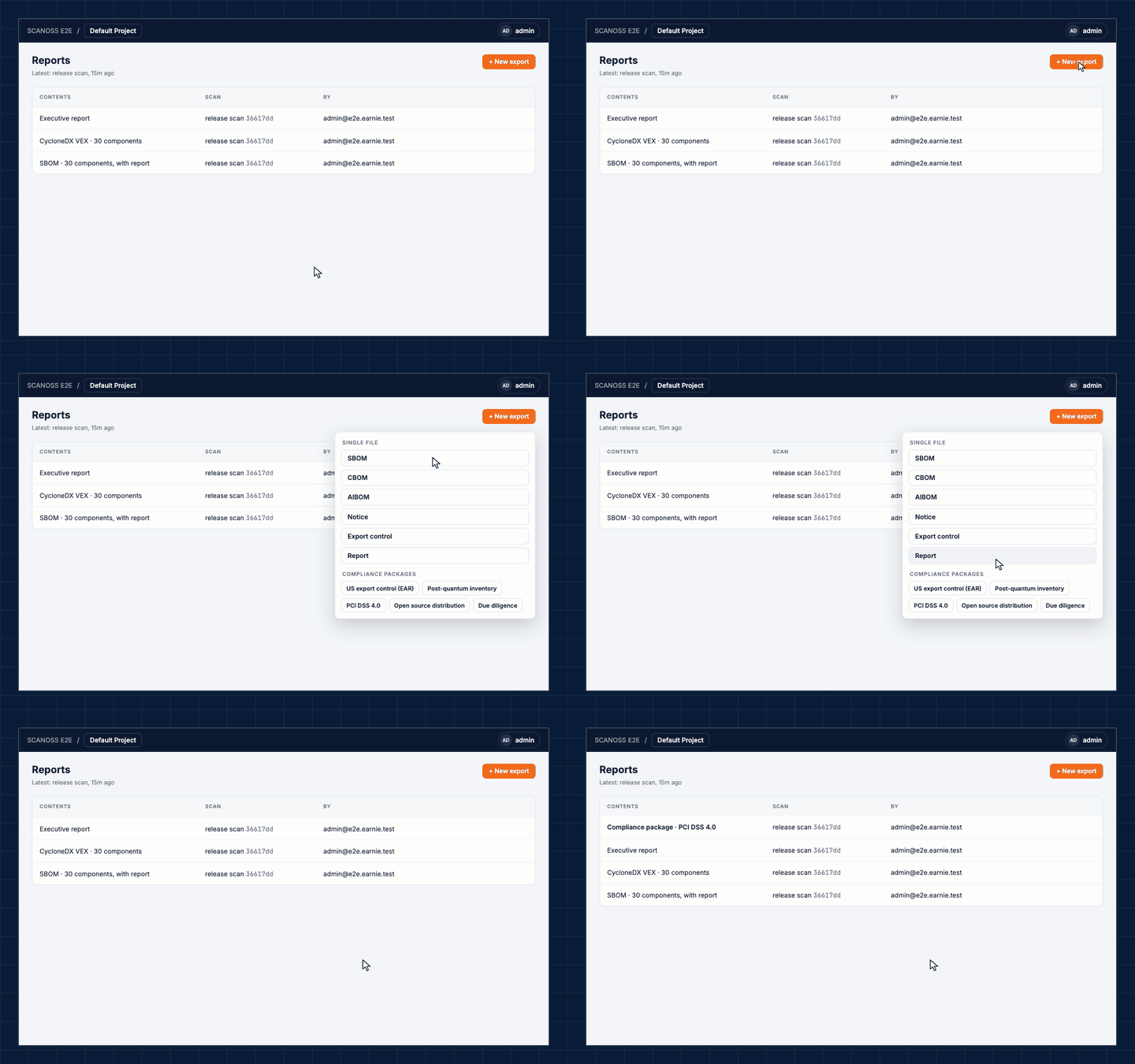
Earnie now brings these exports together in a dedicated Reports area.

Teams can generate six types of exports:

  • SBOM
  • CBOM
  • AIBOM
  • Notice
  • Export control
  • Report
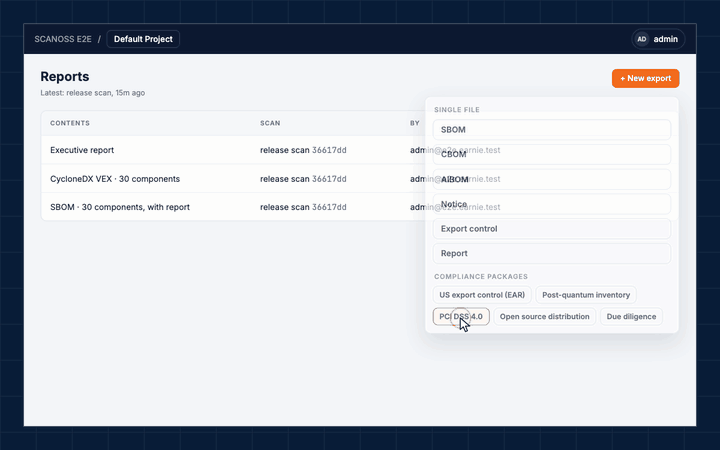
Reports area with the New export menu open: single-file exports and compliance packagesReports area with the New export menu open: single-file exports and compliance packages

Reports can be generated in HTML, CSV, XLSX or PDF, with configurable sections and summary charts. They also support Compliance, Executive and Operator templates.

For broader reporting requirements, Earnie introduces compliance packages. These combine the relevant evidence into a single ZIP file, with a README explaining its contents.

Available package types cover US export control (EAR), post-quantum inventory, PCI DSS 4.0, open source distribution and due diligence.

Reports are available at both project and organisation level, including bulk exports across projects.

Snippet classification: help reviewers focus on the right matches (preview)

Snippet matching can produce findings that require additional review to establish whether the identified open source code is actually present.

Earnie now includes a preview of its snippet classifier, which analyses snippet matches and proposes those that are likely not a match.

The classification appears directly in the Review workflow, alongside the comparison with the open source code. Reviewers can see the proposal and its probability before making a decision.
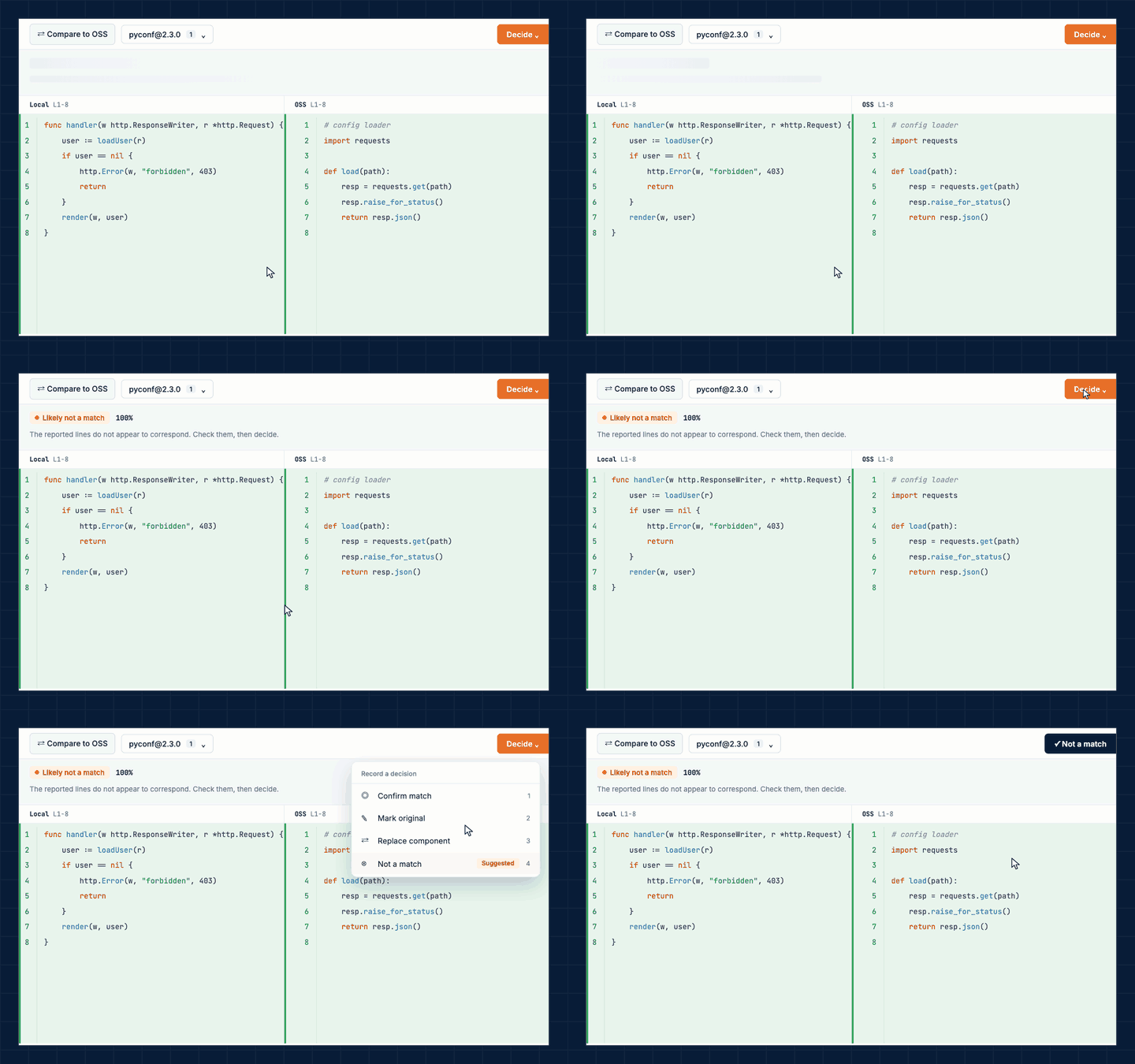
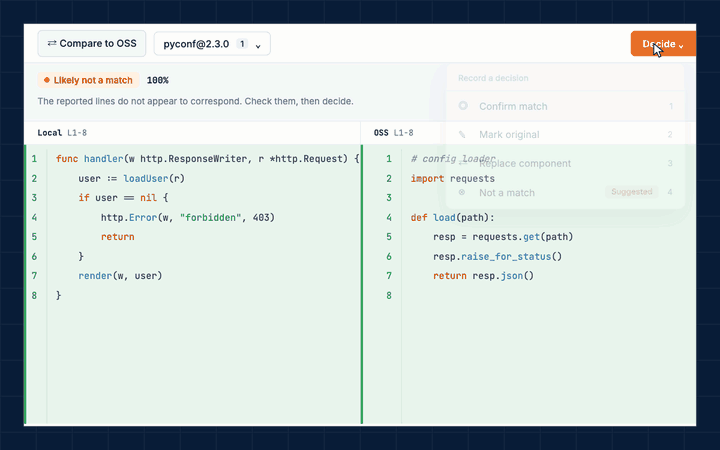
Snippet review comparing local and open source code, with a Likely not a match proposalSnippet review comparing local and open source code, with a Likely not a match proposal

Importantly, the classifier makes recommendations, not decisions. A person still checks the evidence and decides whether a match should be accepted or dismissed.

The preview is available through an organisation-level feature toggle.

Earnie in six languages

Earnie's interface is now available in six languages: English, Japanese, Chinese, French, German and Korean.

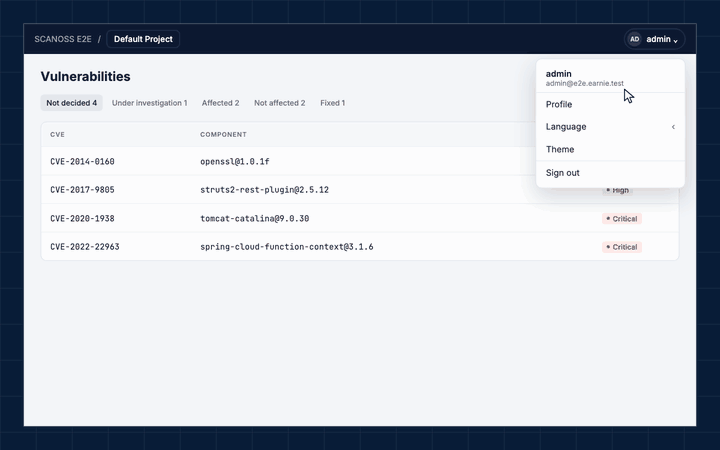
Each user chooses a language from the user menu, so reviewers in different countries can work through findings, vulnerability statements and policies in the language they read best.
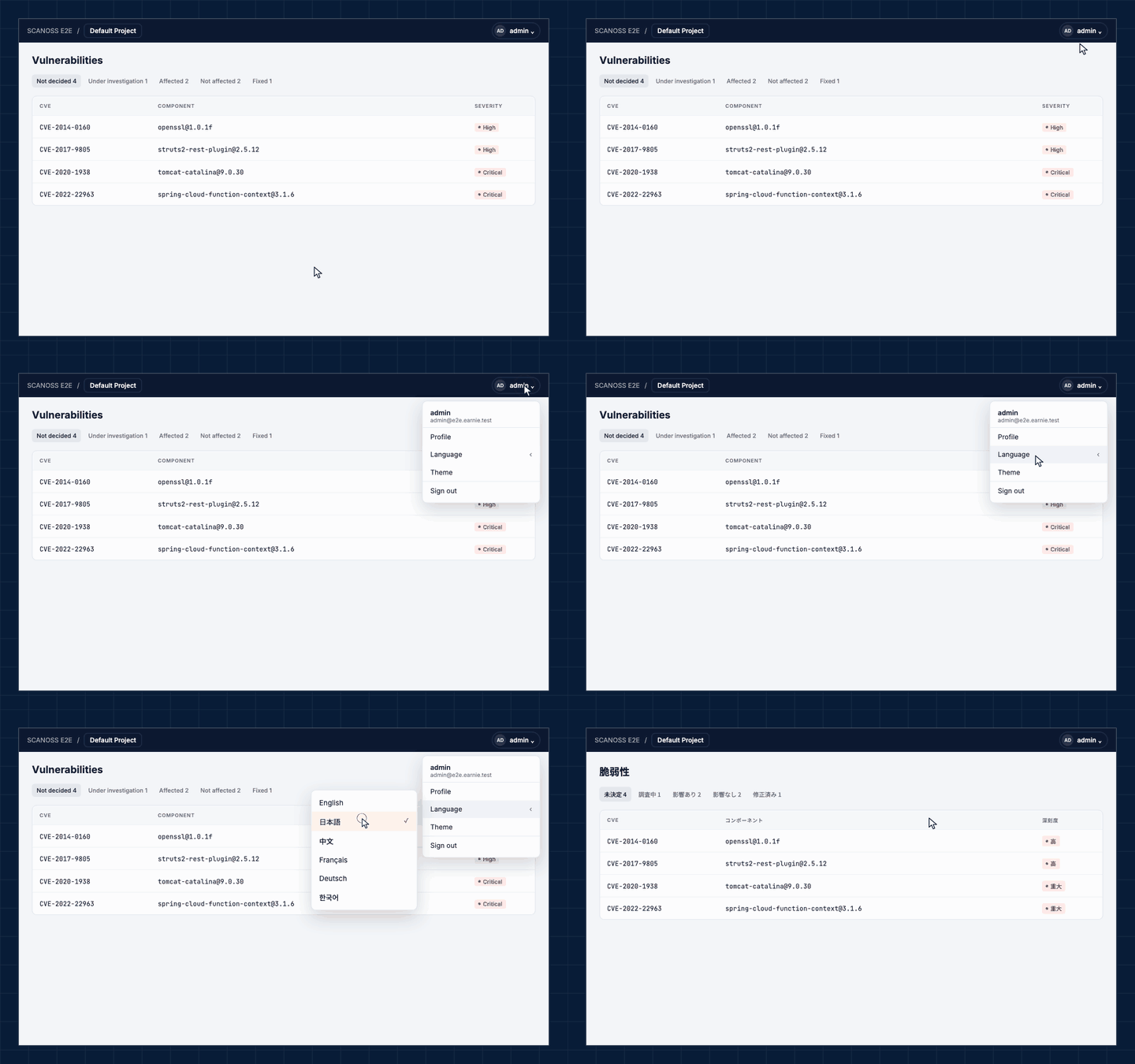
User menu open on the Vulnerabilities page, showing the Language optionUser menu open on the Vulnerabilities page, showing the Language option

Available now

These improvements are available in Earnie v0.5.0, with the export CLI capabilities available in earnie-cli v0.6.0.

The snippet classifier is available as a preview and requires the corresponding feature toggle to be enabled.

For more information, visit the Earnie documentation or explore the Field Notes.

What's next

Earnie continues to evolve as teams bring more of their software governance workflows into one place.

We'll keep documenting the improvements, new capabilities and practical changes as they become available.

RELATED READING

See it on your kind of codebase.

Request a demo
Earnie: more control over vulnerability decisions
Earnie
PRODUCT UPDATECOMPANY NEWS

More control over vulnerability decisions with Earnie

Earnie adds VEX statements, policy dry runs, compliance packages and AI-assisted snippet review to support vulnerability and compliance decisions.

Matias D’Aloia
Chief Product Officer
3 min read

TL;DR: Earnie now connects vulnerability decisions, policy testing and compliance reporting in a more complete workflow. Teams can record whether vulnerabilities affect their products, test policy changes against real findings before enforcing them, and generate the evidence needed for regulators and customers. Snippet classification is also available as a preview to help reviewers assess potential false positive matches.

What's new in Earnie

This update brings several improvements to how teams review findings, apply security policies and prepare software compliance evidence.

Vulnerability statements: record what actually affects your product

Not every vulnerability identified in a software component necessarily affects the product that uses it.

Earnie now supports Vulnerability Exploitability eXchange (VEX) statements, allowing teams to record whether a vulnerability is affected, not affected, fixed or still under investigation.

Each statement includes a justification and a full history, so teams can document the reasoning behind their decisions.

Recording a VEX statement for a CVE: status Not affected, justification Vulnerable code not presentRecording a VEX statement for a CVE: status Not affected, justification Vulnerable code not present

These decisions also flow into the rest of the workflow. Policies and project CVE counts take VEX status into account, while CycloneDX exports include the analysis. Teams can also generate standalone CycloneDX VEX and OpenVEX files for use with other security tools.

The result is a consistent record of vulnerability decisions, from internal review to external reporting.

Policy testing: see what a rule would block before enforcing it

Changing a security policy can affect developers across multiple projects.

Earnie's new Try it feature lets teams test a draft policy against real project findings before saving it.

The editor shows exactly what the policy would block, allowing teams to review the results and adjust the rule before it affects development workflows.

Policy editor with the Try it panel: the draft rule would block 1 of 37 findingsPolicy editor with the Try it panel: the draft rule would block 1 of 37 findings

For example, a draft policy might block one finding out of 37. Teams can inspect that result and refine the policy without saving the changes or affecting an active project.

This makes it easier to introduce and adjust governance rules with a clearer understanding of their impact.

Reports and compliance packages: bring your evidence together

Software compliance often requires several different documents, from SBOMs and cryptographic inventories to licence notices and vulnerability reports.

Earnie now brings these exports together in a dedicated Reports area.

Teams can generate six types of exports:

  • SBOM
  • CBOM
  • AIBOM
  • Notice
  • Export control
  • Report
Reports area with the New export menu open: single-file exports and compliance packagesReports area with the New export menu open: single-file exports and compliance packages

Reports can be generated in HTML, CSV, XLSX or PDF, with configurable sections and summary charts. They also support Compliance, Executive and Operator templates.

For broader reporting requirements, Earnie introduces compliance packages. These combine the relevant evidence into a single ZIP file, with a README explaining its contents.

Available package types cover US export control (EAR), post-quantum inventory, PCI DSS 4.0, open source distribution and due diligence.

Reports are available at both project and organisation level, including bulk exports across projects.

Snippet classification: help reviewers focus on the right matches (preview)

Snippet matching can produce findings that require additional review to establish whether the identified open source code is actually present.

Earnie now includes a preview of its snippet classifier, which analyses snippet matches and proposes those that are likely not a match.

The classification appears directly in the Review workflow, alongside the comparison with the open source code. Reviewers can see the proposal and its probability before making a decision.

Snippet review comparing local and open source code, with a Likely not a match proposalSnippet review comparing local and open source code, with a Likely not a match proposal

Importantly, the classifier makes recommendations, not decisions. A person still checks the evidence and decides whether a match should be accepted or dismissed.

The preview is available through an organisation-level feature toggle.

Earnie in six languages

Earnie's interface is now available in six languages: English, Japanese, Chinese, French, German and Korean.

Each user chooses a language from the user menu, so reviewers in different countries can work through findings, vulnerability statements and policies in the language they read best.

User menu open on the Vulnerabilities page, showing the Language optionUser menu open on the Vulnerabilities page, showing the Language option

Available now

These improvements are available in Earnie v0.5.0, with the export CLI capabilities available in earnie-cli v0.6.0.

The snippet classifier is available as a preview and requires the corresponding feature toggle to be enabled.

For more information, visit the Earnie documentation or explore the Field Notes.

What's next

Earnie continues to evolve as teams bring more of their software governance workflows into one place.

We'll keep documenting the improvements, new capabilities and practical changes as they become available.

RELATED READING
PRODUCT UPDATE · COMPANY NEWS
New release: Earnie
ARTICLE · REGULATIONS
CRA reporting: why 24 hours needs a standing inventory

See it on your kind of codebase.

Request a demo